What to Look for in Container Tracking Software
Before diving into specific platforms, it's worth establishing a shared framework. The best container tracking tools should deliver on these core criteria:
- Carrier and terminal coverage: Does the platform track the carriers and ports you actually use?
- Data quality and normalization: Are events reliable, consistent, and deduplicated across sources?
- Integration flexibility: Can you connect it to your TMS, ERP, or custom-built systems via API?
- Pricing transparency: Is the cost structure clear, or do you need to get a quote just to understand what you'll pay?
- Last Free Day (LFD) tracking: Can the platform surface detention and demurrage deadlines, not just vessel ETAs?
- Modes supported: Ocean-only, or does it extend to rail, truck, and air?
- Time-to-value: How long does it take to get up and running?
With those criteria in mind, let's look at the platforms.
The 6 Best Container Tracking Platforms in 2026
1. Terminal49
Overview
Terminal49 is an API-first container tracking platform built for importers, freight forwarders, and logistics technology teams. It focuses specifically on ocean and intermodal shipments and has made data quality its core differentiator. Terminal49 recently launched free global container tracking, giving teams access to live shipment status without a contract.
Key Strengths
- Data quality and normalization: Terminal49 normalizes container events across 33+ shipping lines into a single, consistent data schema. This matters more than it sounds — anyone who has tried to stitch together raw carrier EDI feeds knows how messy and inconsistent the underlying data can be.
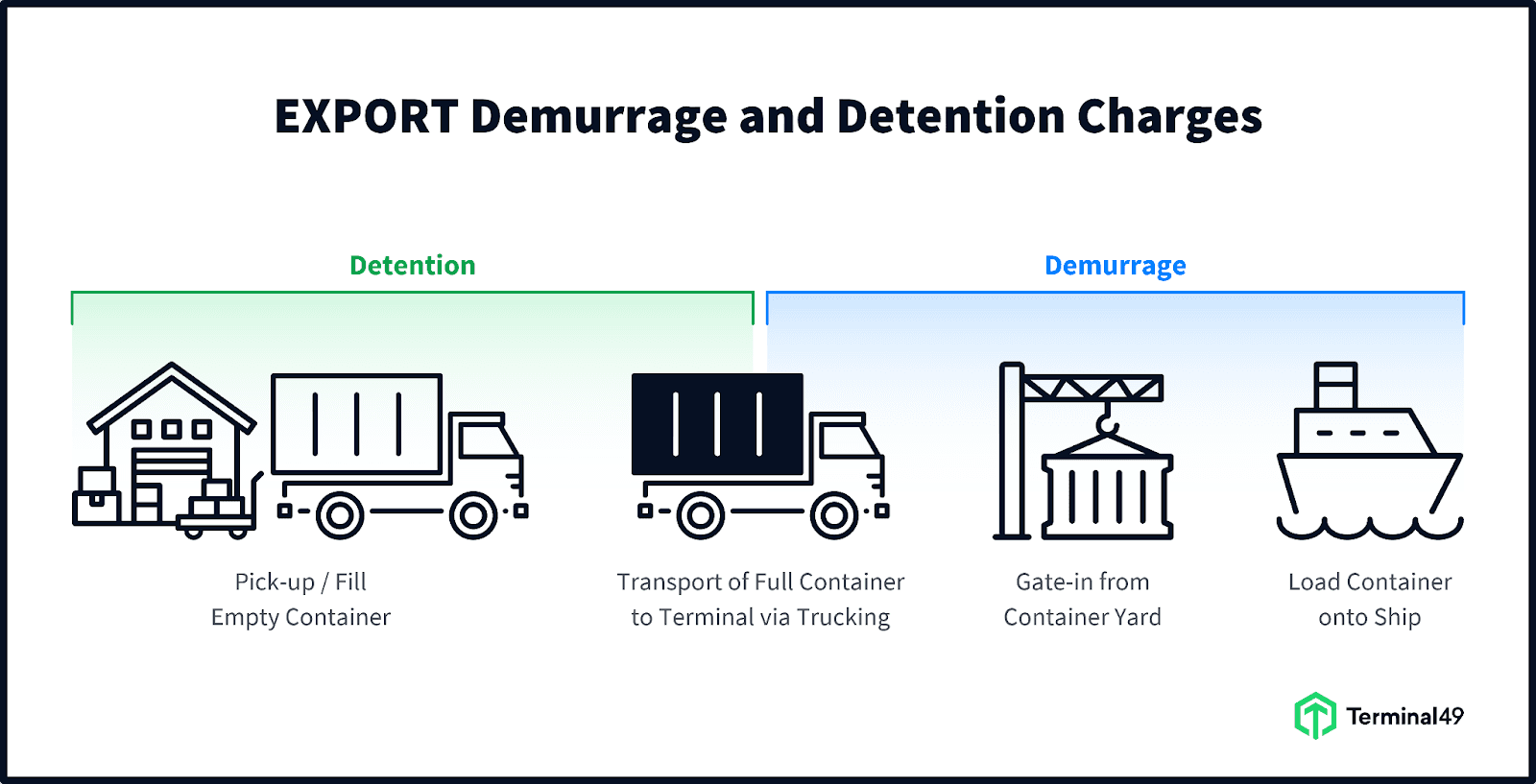
- Terminal + carrier LFD tracking: One of Terminal49's most distinctive features is its coverage of 1,300+ terminals, including the ability to surface Last Free Day deadlines from both terminal and carrier sources. This is critical for teams trying to avoid detention and demurrage charges.
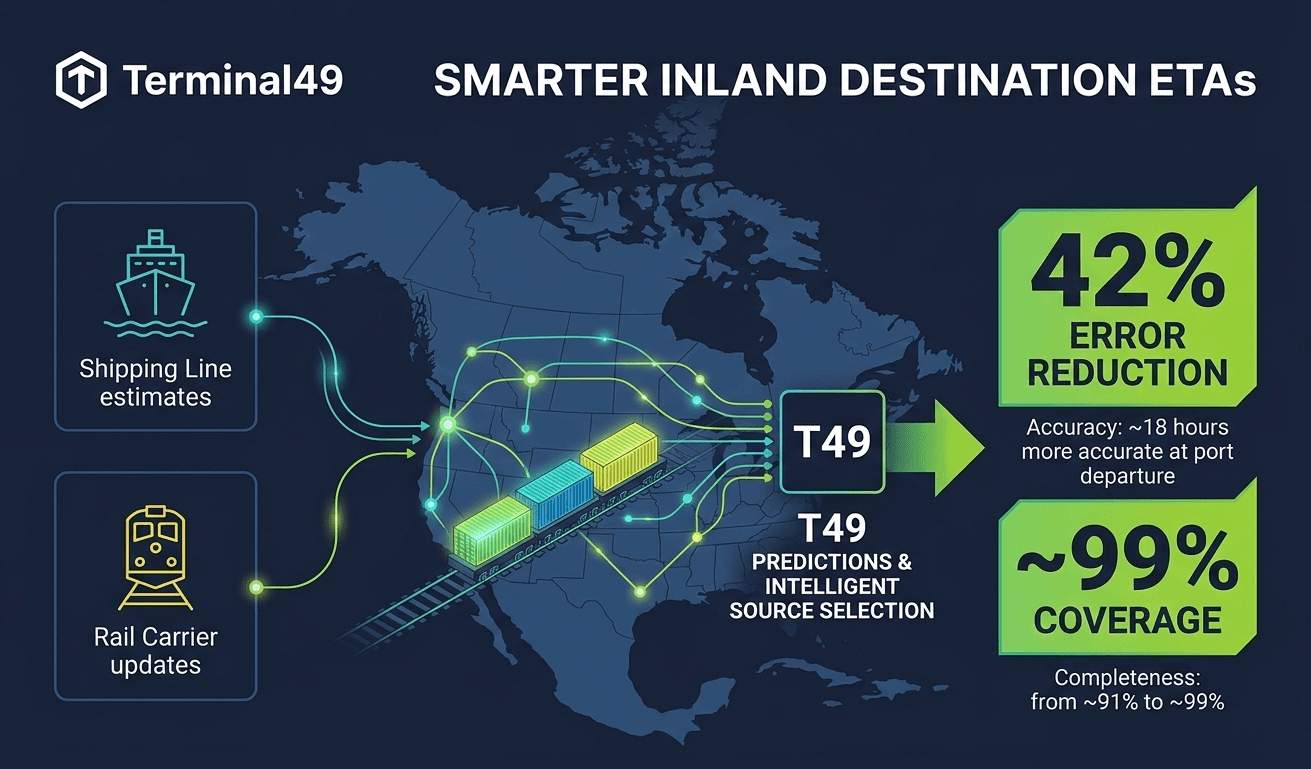
- Intermodal rail tracking: Terminal49 tracks containers on rail, not just ocean legs — a capability that's rare among platforms focused on ocean visibility.
- Transparent pricing: Unlike most enterprise visibility platforms, Terminal49 publishes its pricing. There's no "contact sales for a quote" wall just to understand the cost.
- Free tier available: Teams can start tracking containers immediately without a contract or credit card.
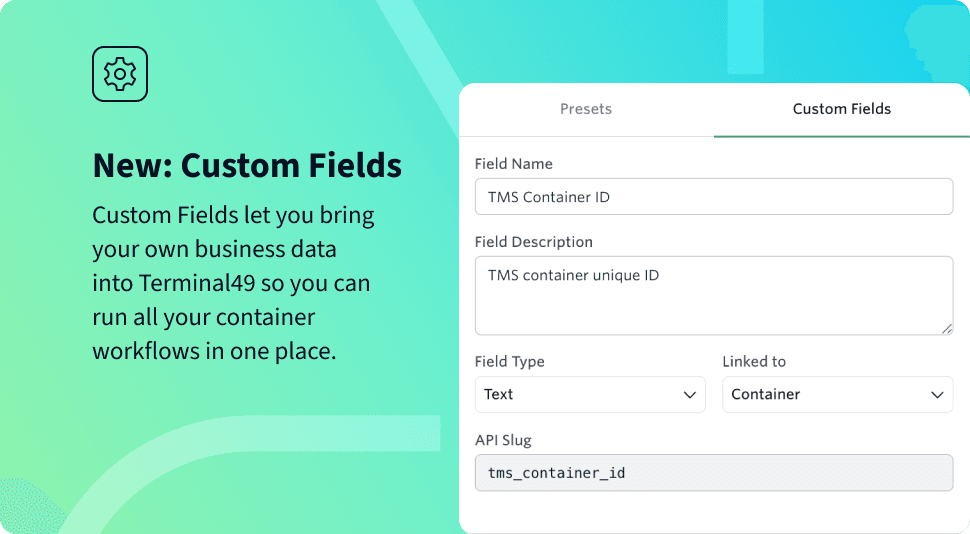
- API-first design: The API is clean, well-documented, and designed for teams building custom integrations or embedded visibility features.
Best For
Importers, freight forwarders, and logistics tech teams who need reliable, normalized container data with strong API access. Also well-suited for teams where detention and demurrage cost control is a priority.
Limitations
Terminal49 is focused on ocean and intermodal visibility. It does not offer the full multimodal coverage (air, full truckload, LTL) that broader supply chain visibility platforms provide. For companies that need a single platform covering every transportation mode from factory to doorstep, Terminal49 may need to be paired with other tools.
2. project44
Overview
project44 is one of the most established names in supply chain visibility. The company has built a broad platform covering ocean, air, truck, and rail, and serves many of the world's largest shippers and logistics providers. Their network is extensive, and the platform is deeply integrated into enterprise logistics stacks.
Key Strengths
- Broad multimodal coverage — ocean, air, truckload, LTL, rail
- Deep carrier and 3PL network with thousands of connections
- Advanced analytics and reporting capabilities
- Strong enterprise integrations (SAP, Oracle, major TMS platforms)
- Predictive ETA modeling
Best For
Large enterprises with complex, multimodal supply chains that need a single platform across all transportation modes and have the budget and IT resources to support a full implementation.
Limitations
project44 is an enterprise product with enterprise pricing. Costs are significant and not publicly disclosed, meaning smaller shippers and mid-market companies are often priced out. Implementation can be lengthy, and the platform's breadth can make it more complex than necessary for teams with primarily ocean freight needs. The platform has also expanded rapidly through acquisitions, which can mean inconsistency in data quality and UX across different modules.
3. FourKites
Overview
FourKites began as a real-time freight visibility platform for truckload shipments and has expanded significantly into ocean and multimodal tracking. The company has been pushing aggressively into AI-driven supply chain orchestration, positioning itself not just as a visibility tool but as an active decision-support layer.
Key Strengths
- Strong real-time visibility for North American trucking
- Solid ocean tracking with expanding global coverage
- AI-powered ETAs and exception management
- Collaboration features for sharing visibility across supply chain partners
- Established presence in retail and CPG verticals
Best For
Enterprise shippers, particularly in North American retail and manufacturing, who need strong domestic trucking visibility combined with growing ocean tracking capabilities and want to explore AI-assisted supply chain decision-making.
Limitations
FourKites' ocean tracking, while improving, is not as deep as platforms built specifically for ocean freight. Pricing is enterprise-tier and not transparent. The platform's pivot toward broader AI orchestration means ocean-focused teams may be paying for capabilities they don't need. Smaller logistics businesses and freight forwarders may find both the cost and complexity prohibitive.
4. Shippeo
Overview
Shippeo is a European-headquartered supply chain visibility platform with strong roots in road freight across Europe. The company has expanded into ocean and multimodal tracking and has invested heavily in predictive ETA technology using machine learning models trained on historical data.
Key Strengths
- Excellent road freight visibility in Europe — one of the strongest in the market
- Predictive ETA technology with solid accuracy for European lanes
- Strong carrier network in Europe and growing globally
- Clean, modern interface with good collaboration features
- Solid integration capabilities with major ERP and TMS systems
Best For
European manufacturers, retailers, and logistics providers who need strong road freight visibility across Europe, combined with ocean tracking for their international shipments. Also a good fit for companies where ETA prediction accuracy is a top priority.
Limitations
Shippeo's coverage outside Europe is narrower than that of its North American-headquartered competitors. Companies with primarily Asia-Pacific or North American supply chains may find coverage gaps. Pricing is enterprise-oriented and not publicly disclosed. For teams that are primarily ocean-focused rather than road freight-focused, the platform may include significant overhead for features they won't use.
5. ShipsGo
Overview
ShipsGo is a container tracking platform that positions itself as an accessible, cost-effective option for freight forwarders and small-to-medium importers. The platform covers 160+ shipping lines and offers a freemium tier, making it one of the most accessible options in the market by price point.
Key Strengths
- Coverage of 160+ shipping lines — one of the broadest carrier footprints in the market
- Freemium model with genuinely useful free-tier functionality
- Simple, easy-to-use interface with minimal setup time
- CO2 emissions tracking features
- Reasonable pricing for SMB customers
Best For
Small and medium freight forwarders, SMB importers, and teams looking for a lightweight tracking tool with broad carrier coverage and minimal budget. Also useful for teams that want basic visibility without committing to a complex implementation.
Limitations
ShipsGo's data depth and normalization do not match enterprise-grade platforms. The platform is primarily a tracking interface rather than a full API integration layer, which limits its usefulness for teams that want to embed tracking data into their own systems. Terminal and LFD tracking capabilities are more limited. The platform lacks intermodal tracking and more sophisticated exception management.
6. Vizion API
Overview
Vizion API is a developer-first container tracking platform. Rather than offering a shipper-facing interface, Vizion focuses on providing a clean, reliable API that logistics technology companies, freight forwarders, and shippers can use to build their own visibility products. The platform provides standardized container event data across major carriers.
Key Strengths
- Clean, well-documented RESTful API designed for developers
- Standardized container event schemas across carriers — reduces integration complexity significantly
- Good carrier coverage for ocean freight
- Transparent API-focused pricing model
- Strong fit for technology teams building visibility features into their own products
Best For
Logistics technology companies, freight forwarders building their own TMS or customer portals, and enterprise tech teams that want a data layer to power custom-built visibility features. Not designed for teams that want an out-of-the-box tracking interface.
Limitations
Vizion is explicitly a developer tool, not an end-user application. Teams without engineering resources to build on top of the API will not get value from the platform. Terminal and LFD tracking capabilities are less extensive than Terminal49's. The platform lacks a free tier and is not designed for direct use by operations teams without a technical implementation layer.
Feature Comparison Table
Feature | Terminal49 | project44 | FourKites | Shippeo | ShipsGo | Vizion API
Carrier Coverage | 33+ shipping lines | 1,000+ carriers (all modes) | Broad (multimodal) | Strong in Europe | 160+ shipping lines | Major ocean carriers
Terminal Coverage | 1,300+ terminals | Broad | Limited | Limited | Limited | Limited
API Access | Yes (API-first) | Yes | Yes | Yes | Limited | Yes (API-only)
Free Tier | Yes | No | No | No | Yes (freemium) | No
Pricing Transparency | Public pricing | Quote required | Quote required | Quote required | Public pricing | Public pricing
Ocean Tracking | Yes | Yes | Yes | Yes | Yes | Yes
Rail/Intermodal | Yes | Yes | Limited | Limited | No | No
Road/Truck Tracking | No | Yes | Yes (strong) | Yes (strong in EU) | No | No
Air Freight | No | Yes | Limited | No | No | No
LFD/D&D Tracking | Yes (terminal + carrier) | Partial | Partial | Partial | No | Limited
Best For | Importers, forwarders, tech teams | Large enterprise | Enterprise, North America | European enterprise | SMB, forwarders | Dev teams, tech builders
Time to Value | Fast (free tier, API docs) | Long (enterprise implementation) | Long | Medium | Fast | Medium (dev effort required)
How to Choose the Right Container Tracking Platform
With six solid options on the table, the right choice depends on your specific situation. Here are the most important factors to work through before making a decision.
1. Define your transportation modes
If your supply chain is primarily ocean freight — or ocean plus domestic rail — you don't need to pay for a multimodal platform built for trucking and air. Conversely, if you're managing complex door-to-door movements across every mode, a dedicated ocean tracker won't cover your full picture. Be honest about the modes you actually need to track.
2. Assess your technical resources
Are you looking for a plug-and-play interface your operations team can use immediately, or do you have engineering capacity to build on top of an API? Developer-first tools like Vizion API and Terminal49's API layer can deliver more customization and deeper integration, but they require technical resources. If you have no development bandwidth, prioritize platforms with strong out-of-the-box interfaces.
3. Understand your carrier and terminal mix
Carrier coverage numbers are marketing, but the carriers that matter are the ones you actually use. Before signing a contract, ask each vendor specifically about coverage for your top carriers and the terminals where you have the most volume. LFD tracking from terminals is particularly important if detention and demurrage costs are a pain point — and for most importers, they are.
4. Be realistic about budget
Enterprise platforms like project44 and FourKites deliver real value for large organizations with the budget and IT resources to use them fully. But for mid-market shippers, freight forwarders, and growing importers, the cost-benefit math often doesn't work out. Look for platforms with transparent pricing and free tiers that let you validate value before committing.
5. Think about integration requirements
Where does tracking data need to go? If it needs to flow into a TMS, an ERP, a customer portal, or a custom-built operations tool, you need an API that's reliable, well-documented, and returns normalized data. Inconsistent or poorly documented APIs create ongoing engineering overhead that erodes the value of the integration over time.
6. Test before you commit
Several platforms — including Terminal49 and ShipsGo — offer free tiers that let you track real shipments before committing to a paid plan. This is the most honest way to evaluate data quality and usability. If a vendor won't let you see the product work on your own data before signing a contract, that's worth noting.
The Bottom Line
There is no single best container tracking platform for every company. The right choice depends on your freight modes, technical resources, carrier mix, and budget.
That said, a few patterns emerge from this comparison:
- For enterprise companies managing complex multimodal supply chains, project44 and FourKites remain the most comprehensive options, with the implementation investment and cost to match.
- For European companies with strong road freight needs, Shippeo is a genuine leader in that category.
- For budget-conscious SMBs and freight forwarders, ShipsGo provides broad carrier coverage at accessible price points.
- For developer teams building logistics technology, Vizion API provides a clean data layer worth evaluating.
- For importers, freight forwarders, and logistics teams who need reliable ocean and intermodal tracking with strong API access, transparent pricing, and genuinely useful LFD data, Terminal49 stands out — particularly for teams where detention and demurrage cost control is a priority and for those who want to start tracking without committing to a vendor contract.
The combination of normalized data quality, terminal-level LFD tracking, intermodal rail visibility, a free tier, and public pricing makes Terminal49 worth serious consideration for any team operating primarily in the ocean freight space.
Start Tracking Containers for Free with Terminal49
Terminal49 offers free global container tracking across 33+ shipping lines and 1,300+ terminals — no contract required. You can start tracking shipments today, explore the API documentation, and see the data quality for yourself before making any commitment.
If you're evaluating container tracking software in 2026, the fastest way to cut through the vendor noise is to track your own containers and judge the results directly.
Start tracking for free on Terminal49 →
Last updated: April 2026. Platform features and pricing are subject to change. We recommend verifying current capabilities directly with each vendor before making a purchasing decision.
Key Takeaways
- Prioritize container tracking platforms that offer reliable data quality, terminal-level LFD tracking, and transparent pricing for real cost control.
- Match your platform choice to your actual transportation modes and technical resources to avoid unnecessary complexity and cost.
- Verify carrier and terminal coverage for your specific routes before committing to any vendor.
- Test platforms with free tiers or trials to evaluate real-world data quality and usability before signing a contract.
- Ensure your chosen solution integrates smoothly with your TMS, ERP, or custom systems via a robust, well-documented API.